
Small Rock Bridge in Wadi Rum
A Hidden Natural Arch Worth Visiting
Small Rock Bridge in Wadi Rum
Among the many natural rock formations scattered across the vast desert landscape of Wadi Rum Protected Area, the Small Rock Bridge is one of the lesser-known yet charming natural arches that visitors can explore.
While Wadi Rum is famous for larger formations such as Burdah Rock Bridge and Um Frouth Rock Bridge, the Small Rock Bridge offers a quieter and more accessible experience for travelers who want to see the unique geology of the desert without a long or difficult climb.
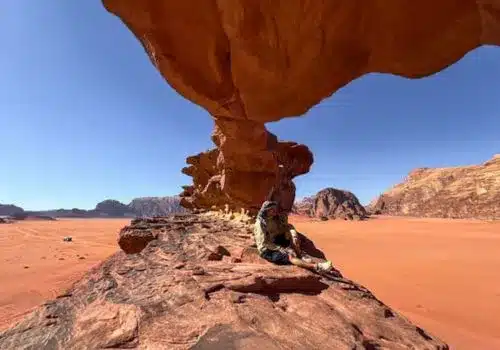
Located among sandstone cliffs and wide desert valleys, this modest but beautiful arch is a frequent stop during jeep tours, hiking trips, and desert excursions. Its gentle slope allows visitors to climb easily to the top, where panoramic views reveal the red sand plains and layered mountains that make Wadi Rum one of the most remarkable desert landscapes in the Middle East.
Although smaller than the famous arches nearby, the Small Rock Bridge perfectly captures the natural beauty, geological history, and peaceful atmosphere that define the Wadi Rum desert.
What is the Small Rock Bridge?
The Small Rock Bridge is a naturally formed sandstone arch shaped over thousands of years by wind erosion, temperature changes, and occasional rainfall slowly carving the rock formations of the desert.
Like many geological features in Wadi Rum, the bridge formed as softer layers of sandstone gradually eroded away, leaving behind stronger sections of rock that eventually created a natural arch.
Compared with the dramatic height of Burdah Rock Bridge, the Small Rock Bridge is much lower and easier to access. This makes it particularly appealing for travelers who want to climb a rock arch and enjoy desert views without the steep hiking routes required for larger formations.
Because of its accessibility, many local Bedouin guides include this stop as part of classic desert tours.
Visitors often spend time here:
Climbing the arch Taking photographs of the formation
Enjoying the quiet desert scenery
Learning about the geology of Wadi Rum from local guides
Despite its smaller size, the formation offers a beautiful example of the natural processes that have shaped the landscape for millions of years.


Where is the Small Rock Bridge Located?
The Small Rock Bridge lies within the central region of the Wadi Rum Protected Area in southern Jordan, not far from the desert settlement of Wadi Rum Village.
It is usually visited during jeep tours that explore several nearby landmarks, including:
Khazali Canyon
Lawrence’s Spring
Um Frouth Rock Bridge
Because these sites are relatively close to one another, the Small Rock Bridge fits naturally into both half-day and full-day desert itineraries.
Most visitors arrive by 4×4 vehicle, followed by a short walk to the base of the arch.
Climbing the Small Rock Bridge
One of the reasons the Small Rock Bridge is popular with visitors is that it can be climbed easily without special equipment.
A short natural path leads to the top of the arch, and the sandstone surface generally provides enough grip for safe footing in dry conditions. The climb usually takes only a few minutes.
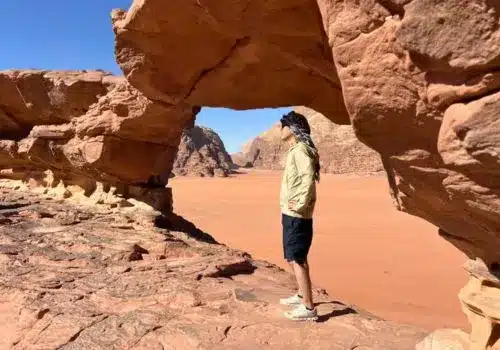
From the top, visitors can enjoy wide views of the surrounding desert valley, where layers of sandstone mountains rise above the red sand plains. The natural curve of the arch also creates a perfect frame for photographs.
Even though the climb is relatively simple, visitors should still walk carefully and follow the advice of their local guide, especially if the rock surface is dusty or worn smooth by many footsteps.
Geological Formation of Rock Bridges in Wadi Rum
The rock bridges found throughout Wadi Rum are the result of long geological processes that shaped the desert landscape over millions of years.
The region is dominated by sandstone and granite formations. Sandstone is relatively soft and porous, making it vulnerable to erosion caused by wind, water, and extreme temperature changes between day and night.
Over time, weaker sections of rock gradually wear away while stronger layers remain intact. This process can eventually create openings within the rock, forming arches and bridges.
The desert winds continue to sculpt these formations, smoothing their surfaces and shaping the dramatic structures visible today.
Rock bridges like the Small Rock Bridge are therefore not only scenic landmarks but also natural examples of the powerful forces that shape desert environments.
Visiting the Small Rock Bridge
The Small Rock Bridge is typically visited as part of a desert tour organized by local Bedouin guides. Most tours depart from the area near the Wadi Rum Visitor Center and travel through the desert by 4×4 vehicle.
Common ways to visit include:
Jeep Tours : Jeep tours are the most popular way to reach the Small Rock Bridge. Many half-day and full-day tours include it as a stop alongside several other desert landmarks.
Hiking Tours : Visitors interested in exploring the desert on foot can reach the area during guided hiking trips through nearby valleys and rock formations.
Camel Tours : For travelers seeking a more traditional desert experience, some camel rides pass through valleys near the rock bridge, offering a slower and more peaceful way to explore the landscape.


Best Time to Visit
The best time to visit the Small Rock Bridge is during the cooler months between October and April, when temperatures in Wadi Rum are more comfortable for walking and climbing.
Early morning and late afternoon are particularly beautiful times to visit. During these hours the sunlight casts long shadows across the desert and highlights the rich red and orange tones of the sandstone cliffs.
Sunset is especially dramatic, when the surrounding mountains glow with deep colors as the sun disappears behind the desert horizon.
Respecting the Desert Environment
Wadi Rum is a protected natural area and home to local Bedouin communities who have lived in the desert for generations.
Visitors should help preserve this fragile environment by:
Avoiding littering
Respecting rock formations and ancient carvings
Following the guidance of local Bedouin guides
Staying on safe and established paths
Responsible tourism helps protect the natural beauty of Wadi Rum for future generations.
Why the Small Rock Bridge is Worth Visiting
While it may not be the tallest arch in the desert, the Small Rock Bridge captures the essence of what makes Wadi Rum special. It combines natural beauty, geological history, and the quiet atmosphere of the desert in a single easy-to-reach location.
For many travelers, climbing this modest arch and looking out over the red sands below becomes one of the memorable moments of their journey through the desert.
In a landscape filled with towering cliffs and dramatic mountains, simple formations like the Small Rock Bridge remind visitors how patiently nature shapes the world over time.