Visit Wadi Rum
Wadi Rum · Jordan

Visit Wadi Rum

Enter the protected desert, cross its wide valleys and rock formations, watch the landscape change toward sunset, and experience what a visit to Wadi Rum is really like.

The desert experience

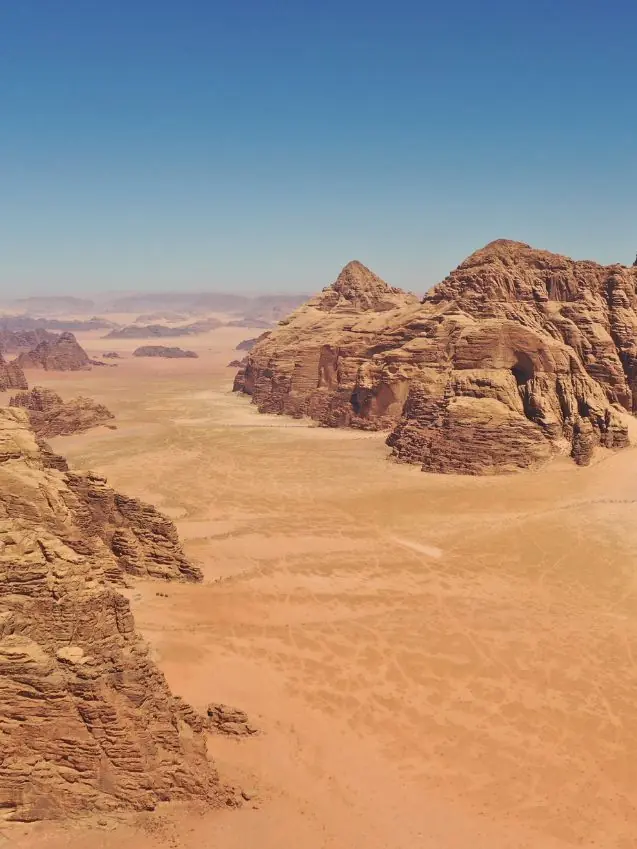
Visiting Wadi Rum is not simply about seeing a desert. The experience unfolds as you move away from the village and into a landscape of open valleys, sandstone mountains, quiet canyons and changing desert light.

For many travelers visiting southern Jordan, Wadi Rum becomes one of the most distinctive parts of the journey. The scale of the mountains, the open horizon and the contrast between red sand and rock give the protected area a character very different from Jordan’s cities and archaeological sites.

This page follows the experience itself. For deeper information about the landscape, history and cultural background, continue to our dedicated About Wadi Rum guide.

Learn About Wadi Rum →
The journey

What a visit to Wadi Rum looks like

Every itinerary is different, but most visits follow a natural rhythm from arrival at the edge of the protected area to time spent deeper inside the desert.

01

Arrive

Reach the Wadi Rum area and continue from the arrival point toward Rum Village and the desert.

02

Enter the desert

Leave the paved roads behind as the route opens into broad valleys surrounded by sandstone and granite mountains.

03

Explore

Travel between viewpoints, dunes, canyons, rock bridges and archaeological sites by jeep, on foot or as part of a combined trip.

04

Slow down

Stops for tea, walking and quiet viewpoints give you time to experience the landscape rather than simply pass through it.

05

Watch sunset

Toward evening, longer shadows reveal the shape of the mountains before the light fades across the desert.

06

Stay or return

Finish with a return to Rum Village or remain inside the desert for dinner, an overnight stay and the quieter atmosphere after dark.

Inside Wadi Rum

From the arrival point into open desert

One of the strongest impressions of visiting Wadi Rum comes early in the journey. Roads and buildings gradually disappear behind you and the landscape opens into wide valleys bordered by immense rock formations.

From this point, travel through the protected area is part of the experience itself. Routes pass between dunes, mountains, canyons and natural rock formations rather than following ordinary roads.

The Wadi Rum Visitor Center is the main arrival point for the protected area and provides practical information before entering the desert.

Wadi Rum Visitor Center →
Visit Wadi Rum
Rock formations and natural landmarks form part of the journey through Wadi Rum.
Explore the desert

Different ways to experience Wadi Rum

The best way to explore depends on how much time you have and whether you want to cover more of the desert or experience it at a slower pace.

01 · Jeep

Travel farther

Jeep tours make it possible to move between distant valleys, viewpoints, dunes and rock formations within a limited amount of time.

Explore Wadi Rum Jeep Tours →
02 · Hiking

Move more slowly

Hiking changes the scale of the experience, giving more time to notice the terrain, rock surfaces and quieter parts of the desert.

Explore Jeep & Hiking Tours →
03 · Camel

A quieter rhythm

A camel ride offers a slower way to cross the sand and can be combined with a jeep journey for a different perspective on Wadi Rum.

Explore Jeep & Camel Ride →
Desert light

The experience changes throughout the day

Wadi Rum never looks exactly the same for long. Light, shadow and temperature change how the valleys and mountains feel from morning through evening.

Earlier in the day, softer light reaches into the valleys and the desert often feels quieter. As the sun rises higher, the scale and texture of the mountains become more pronounced against the open sky.

During the afternoon, shadows gradually lengthen across the sand. Near sunset, rock faces and distant mountains take on deeper tones, creating one of the most distinctive moments of a visit.

Sunset moment in the Wadi Rum desert
Evening light across the desert landscape.
Toward evening

Sunset is part of the journey

Sunset is often a natural stopping point during a day in the desert. Guides choose open viewpoints where the horizon and surrounding mountains remain visible as the sun becomes lower.

As the direct light fades, the contrast between rock, sand and shadow becomes softer. The desert also becomes noticeably quieter as daytime visitors begin to leave.

After sunset

Staying after the day visitors leave

A day visit shows the scale and scenery of Wadi Rum, but an overnight stay adds another side of the desert experience. After sunset, movement across the valleys becomes quieter and the pace of the evening changes.

At camp, the evening can include dinner, Bedouin tea and time around the fire before the desert becomes dark. With fewer artificial lights than in populated areas, the open sky becomes a major part of the nighttime experience.

Staying overnight also means waking inside the desert rather than returning only for another daytime visit.

Explore Wadi Rum Accommodation →
Bedouin hospitality during a visit to Wadi Rum
Hospitality and time together form part of an overnight desert stay.
Local experience

Bedouin hospitality during your visit

The relationship between local Bedouin communities and the desert is part of what makes visiting Wadi Rum different from simply viewing a landscape.

Local guides know the routes between valleys, mountains and water sources and understand how conditions change during the day. During a tour or camp stay, visitors may share tea, traditional food and time around the fire while learning more about life in the desert.

The deeper history of Bedouin culture and human presence belongs to our About Wadi Rum section; here, the focus is on how hospitality becomes part of the visitor experience.

Explore Wadi Rum Culture & History →
Time in Wadi Rum

The experience changes with the time you have

There is no single way to visit Wadi Rum. A short visit can introduce the landscape, while additional time allows the journey to move farther from the main arrival area and at a slower pace.

01

A few hours

A first look at the desert with selected viewpoints and landmarks.

02

Half a day

More time to move between different valleys, dunes and rock formations.

03

A full day

A deeper journey with more stops, walking time and a slower desert rhythm.

04

Day & night

Add sunset, dinner, the night sky and waking inside the desert.

Before your visit

Plan the practical details separately

Weather and temperature vary through the year. Spring and autumn generally bring milder daytime conditions, while summer days can be hot and winter nights considerably colder.

Whatever the season, suitable clothing, sun protection, water and an extra layer for cooler evenings are useful when spending time outside in the desert.

For transport, arrival information, seasonal planning and what to prepare before your trip, use the dedicated practical guides below.

Your time in the desert

Choose how you want to experience Wadi Rum

Explore the available desert tours or plan an overnight stay inside Wadi Rum and build the visit around the time you have.

Scroll to Top