
Bedouin Tea
More Than a Cup A Taste of Desert Hospitality
Bedouin hospitality
In the heart of the Jordanian desert, drinking Bedouin tea in Wadi Rum is more than simply enjoying a cup of tea. It is a cultural experience deeply connected to hospitality, tradition, and desert life. For centuries, Bedouins have welcomed guests with freshly brewed tea prepared over a fire, creating a moment of warmth and connection in the vast silence of the desert.
Visitors to Wadi Rum often discover that one of the most memorable parts of their trip is sitting around a fire under the desert sky while sharing tea with local Bedouins. This simple tradition reflects the generosity and welcoming spirit that has defined Bedouin culture for generations. Bedouin tea is strong, sweet, aromatic, and often infused with desert herbs, giving it a distinctive flavor that reflects the natural environment of the desert.
The Role of Tea in Bedouin Hospitality
Hospitality is one of the most important values in Bedouin culture. In the past, travelers crossing the desert relied on the kindness of desert communities for water, food, and shelter. Offering tea became a natural way to welcome guests and create a moment of comfort.
When arriving at a Bedouin camp in Wadi Rum, guests are almost always offered tea shortly after arrival. Preparing and sharing tea is a social ritual that brings people together. It encourages conversation, storytelling, and relaxation after a long journey through the desert landscape. Bedouin tea is usually served in small glass cups, allowing guests to enjoy several servings while sitting together around the fire. The process is unhurried, reflecting the slower rhythm of life in the desert where time is shared rather than rushed.


How Bedouin Tea Is Traditionally Prepared
The preparation of Bedouin tea in Wadi Rum is simple but unique. The traditional method gives the tea a richer taste compared to tea prepared in a modern kitchen.
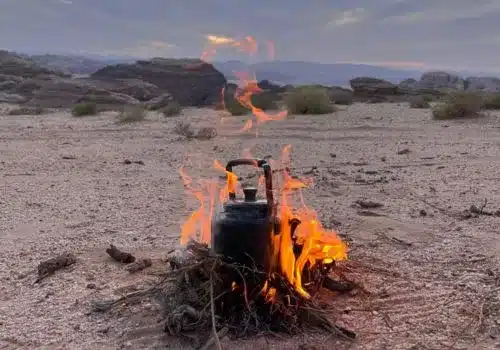
Tea is typically prepared in a metal kettle placed directly over a wood fire or hot coals. Water is brought to a boil first, and sugar is usually added during the boiling process. After that, black tea leaves are added and allowed to simmer for several minutes.
The kettle may be lifted slightly from the fire and returned again to control the strength of the tea. This traditional brewing method allows the tea to develop a deep color and strong flavor.
Once ready, the tea is poured into small glasses and served hot. The aroma alone often fills the air around the campfire, adding to the overall desert experience.
Desert Herbs Used in Bedouin Tea
One of the things that makes Bedouin tea special is the use of natural herbs that grow in desert regions. Bedouins have long known the plants of the desert and use some of them to enhance the flavor of their tea.Common herbs added to Bedouin tea include:
- Sage (Meramia) – one of the most popular additions
- Wild thyme
- Mint
- Cardamom
- Sometimes cinnamon
Each herb adds a slightly different flavor and aroma. Sage gives the tea a warm and earthy taste, while mint creates a refreshing note. Wild thyme brings a distinctive desert fragrance that many visitors find unforgettable.
These herbs not only improve the taste but also reflect the deep connection between Bedouin life and the natural desert environment.


The Unique Flavor of Tea Brewed on a Wood Fire
One of the reasons Bedouin tea in Wadi Rum tastes different is the way it is prepared over a wood fire. Unlike modern stoves, wood fires create uneven heat and a subtle smoky atmosphere. As the kettle sits over the fire, the tea slowly absorbs gentle smoky notes from the burning wood. This gives the drink a deeper and richer character that cannot easily be replicated at home. The experience of watching the kettle over glowing coals, hearing the crackling wood, and smelling the aroma of tea and herbs makes the preparation itself part of the cultural experience. For many visitors, this moment becomes one of the most authentic memories of their desert adventure.
Why Bedouin Tea Is Usually Very Sweet
Another distinctive feature of Bedouin tea is its sweetness. Compared to many other types of tea, Bedouin tea often contains a generous amount of sugar. Historically, this had practical reasons. Life in the desert required energy, especially during long journeys and physical work. Sweet tea provided quick energy and helped people stay refreshed. The sweetness also balances the strong flavor of black tea and the aromatic herbs added during preparation. The result is a drink that is both powerful and comforting. For guests visiting Wadi Rum today, this sweet and flavorful tea has become an essential part of the desert hospitality experience.
A Desert Tradition Visitors Never Forget
Drinking Bedouin tea in Wadi Rum is more than tasting a traditional drink. It is a moment that connects visitors with the heritage and lifestyle of the desert. Imagine sitting beside a fire as the sun sets behind the red mountains of Wadi Rum. The desert grows quiet, the stars begin to appear in the sky, and a warm glass of tea is placed in your hands. In that moment, visitors experience something simple yet powerful: the timeless tradition of Bedouin hospitality. For many travelers, this peaceful experience becomes one of the highlights of visiting Wadi Rum and a memory that stays with them long after the journey ends.