Wadi Rum Travel Guide
Practical advice for getting here, arriving in the protected area, choosing when to visit, and preparing for your time in the desert.
Updated September 2026
Wadi Rum feels remote, but a little planning makes the journey simple.
This guide brings together the practical information travelers need before entering the desert: transport from Aqaba, Petra and Amman, what happens when you arrive, what to pack, and how the seasons affect your visit.
If this is your first introduction to the desert itself, start with our Wadi Rum guide →.
What is Wadi Rum?
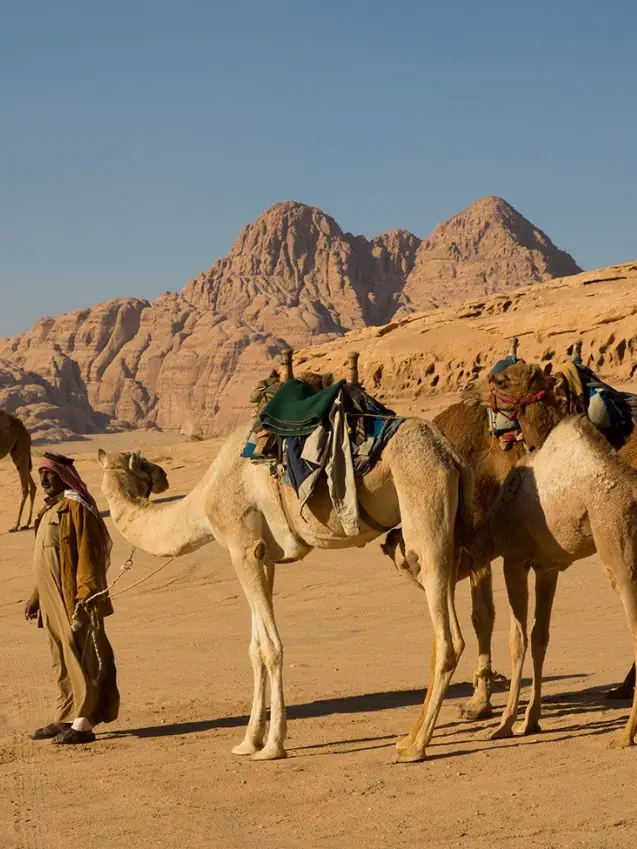
Wadi Rum is a protected desert area in southern Jordan, roughly 60 km east of Aqaba. Sandstone mountains rise above broad valleys and reddish sand, with canyons, natural rock bridges and open desert stretching between them.
Bedouin communities have lived in and around this landscape for generations, and their knowledge of the desert remains an important part of the visitor experience. Wadi Rum is also known internationally as a film location, including productions such as Lawrence of Arabia, The Martian and Dune.
Discover Wadi Rum →
How to get to Wadi Rum
Most travelers reach Wadi Rum from Aqaba, Petra or Amman. Public buses can work well if your timing matches the schedule; a rental car or private transfer gives you more flexibility.
From Aqaba
Aqaba is the closest major city. The road journey is about 70 km and usually takes around 1 to 1.5 hours.
- JETT Bus services may operate between Aqaba and Wadi Rum; check the current timetable before travel.
- A private taxi is a simple option for travelers who want a direct journey.
- A rental car gives you flexibility and can be parked before entering the desert.
From Petra
Wadi Rum is about 110 km from Petra (Wadi Musa), with a typical road journey of around 1.5 to 2 hours.
- Direct bus options can be available between Petra and Wadi Rum; confirm the current departure time in advance.
- Local minibuses may operate without a fixed tourist timetable, so your accommodation can help confirm arrangements.
- A private taxi or driver is the most flexible direct option.
From Amman
Amman is the longest of the common routes, usually around 4 to 5 hours by road depending on traffic and stops.
- Check current JETT services and book ahead when possible.
- A private transfer is convenient for groups or fixed itineraries.
- Self-driving works well for travelers combining Wadi Rum with other destinations in Jordan.
Public transport
Public buses and local minibuses can keep costs down, especially for solo travelers. The trade-off is less flexibility: departure times may be limited and some services require more planning.
Confirm the latest timetable before you travel, particularly if you need to connect with a tour or camp pickup.
Car, taxi or transfer
A rental car, taxi or private driver gives you more control over your schedule. Standard cars normally stop before the desert tracks, while private or rental 4×4 vehicles can enter the protected area after paying the vehicle entry fee and when accompanied by a local Bedouin guide.
Confirm your exact meeting point with your camp or guide before arrival. Depending on your arrangement, this may be at the Visitor Center or in Rum Village.
Prepare for the desert
Wadi Rum is intentionally simple once you leave the village and enter the desert. Bring the essentials with you and confirm the practical details before you arrive.
Before you leave town
- Carry enough cash for your planned stay and any extras.
- Buy sunscreen, water, snacks and personal medication in advance.
- Confirm your pickup location and arrival time with your host.
What to pack
- Comfortable walking or hiking shoes.
- Light daytime layers and warmer clothing for the evening.
- Hat, sunglasses and sunscreen.
- A flashlight or headlamp.
- A power bank for your phone or camera.
- Personal basics such as lip balm, wet wipes and hand sanitizer.
What happens when you arrive
Most visitors first reach the Wadi Rum Visitor Center, the main entrance area for the protected desert. From there, the journey continues toward Rum Village, where many guides and camp operators arrange their meeting point.
If you arrive in a standard rental car, you normally leave it in an agreed parking area before entering the desert with your local host or guide. Private or rental 4×4 vehicles can enter the protected area under the applicable vehicle-entry conditions. From the village, 4×4 vehicles are commonly used to reach camps and begin desert tours..
The entrance fee listed on our current guide is 7 JOD, with entry included for eligible Jordan Pass holders. Check current official conditions before travel in case fees or procedures change.
Main entrance area for the Wadi Rum Protected Area.
A common meeting point for local guides, camp hosts and desert transfers.
Continue by 4×4 to your tour route or accommodation.
Best time to visit Wadi Rum
Wadi Rum can be visited throughout the year, but the desert feels very different from one season to another. Daytime heat, cold nights and the timing of activities all matter.
Spring & autumn
Generally the most comfortable periods for walking, Jeep tours and spending longer hours outside, with milder temperatures than summer.
Summer
Days can become extremely hot, sometimes above 40°C. Activities are often better earlier in the morning or later in the afternoon.
Winter
Daytime conditions can be pleasant, but nights can be surprisingly cold. Warm layers are important, especially if you are staying overnight.
A few things that make the trip easier
Sunset, the night sky and sunrise show a quieter side of Wadi Rum that day visitors do not experience in the same way.
Booking in advance is useful during the busier spring and autumn periods.
Jeep tours, camel rides, hiking and overnight stays offer different ways to experience the landscape. Pick the pace that suits your time and interests.
Dry desert air can be dehydrating even when temperatures feel comfortable.
From practical planning to your time in the desert
Once your transport and arrival are clear, the next decisions are where to stay and how you want to explore Wadi Rum. Keep those choices on their dedicated pages so this travel guide remains focused on practical trip planning.
Arrive prepared. Then let the desert slow everything down.
Use the planning pages for the practical details, then choose the stay and desert experience that fit your trip.
